Cannabinoids and Cys-loop Receptors


Inhaltsverzeichnis
Cys-loop receptors
Polypharmacology
The Future of Cannabinoids in Medicine
Cys-Loop Receptors
Cys-loop receptors belong to the class of membrane-bound, pentameric, ligand-gated ion channels, with each family consisting of multiple subunits. In mammals, GABA type A receptors (GABAAR), glycine receptors (GlyR), serotonin type 3 receptors (5-HT3R), and nicotinic acetylcholine receptors (nAChR) are part of this family. Several studies have shown different modulatory effects of cannabinoids on various members of the Cys-loop receptor family.
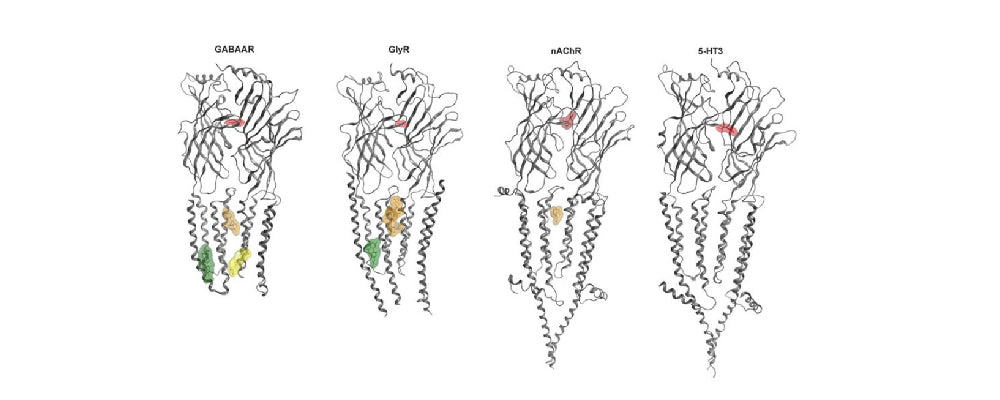
We highlight the existing knowledge, especially about subunits and protein domains with conserved binding sites for cannabinoids and their possible pharmacological and physiological roles in epilepsy and chronic pain. Furthermore, we discuss the potential of cannabinoids as a first-line treatment for epilepsy, chronic pain, and other neuropsychiatric disorders arising from their polypharmacology and therapeutic profile.
Polypharmacology
Polypharmacology describes the way substances can act on different receptor systems in our body, thereby influencing multiple systems. This allows the same individual substances (e.g., CBD) / plants (e.g., hemp and echinacea) or natural compound mixtures such as full-spectrum extracts to achieve multiple effects in various disease conditions. This approach offers great hope in treating people with multiple illnesses, also called comorbidities.
We also provide a current overview of the medications used so far, medical products with cannabinoids, and other products (e.g., cannanx) based on cannabinoids and their characteristic ingredients.
Plants contain a wide variety of substances that, when combined, can produce different effects than when isolated individually. These findings are subject to targeted scientific research, which we have partially generated and summarized experimentally ourselves in the area of Cys-loop receptors, especially with cannabinoids.
The Future of Cannabinoids in Medicine
Further research, especially in the clinical field, is necessary to test and evaluate the findings in sick people. New approaches are also needed for evaluation, as conventional assessment methods are usually designed for the effect on individual diseases/indications, and general improvements in health status are often not included as endpoints in clinical studies. Despite the significant existing stigma around cannabis, we see a clear increase in clinical research with cannabinoids, and the use of cannabinoids in medicine has also risen.
Quellenverzeichnis anzeigen