Anal fissure


Inhaltsverzeichnis
What is an anal fissure?
What causes an anal fissure/tear?
How can you recognize an anal fissure? What are the symptoms of an anal fissure?
What is the difference between an acute anal fissure and a chronic anal fissure?
What does the doctor do for an anal fissure? How does an anal fissure heal the fastest?
How do CANNEFF® SUP suppositories work in the treatment of anal fissures?
What is an anal fissure?
An anal fissure (Fissura ani) is a painful lesion in the mucosa of the Anal canalor a tear in the skin at the anus. This condition can have several causes. Anal tears and anal fissures are among the most commonly diagnosed conditions in the rectal area. An anal fissure is a painful tear of the skin or mucosa of the anus.
What causes an anal fissure/tear at the anus?
A clear cause for the development of an anal fissure is not known. Among other things, too hard stool consistency, overly bulky stool, or excessive straining during frequent constipation or diarrhea are thought to contribute to its development. Anal sex, existing Hemorrhoidal disease or persistent diarrhea can trigger the condition. Stress also plays an important role, and local circulatory disorders are also described as causes.
How can you recognize an anal fissure? What are the symptoms of an anal fissure?
The main symptom of an anal fissure is severe, stabbing pain at the anus. As a result, bowel movements are only possible with pain. Characteristic symptoms of an anal fissure and lesions of the anal mucosa include pain in the anal area that occurs during bowel movements. The intensity can range from mild to stabbing, burning pain. In some cases, this can also lead to an extremely painful anal spasm. The discomfort can persist for a long time after bowel movements but can also be present without bowel movements. Blood deposits on the stool may also occur. Accompanying lesions at the anus, itching at the anus often occurs as well, as described in anal itching.
What is the difference between an acute anal fissure and a chronic anal fissure?
An anal fissure occurs both as an acute condition and as a recurring, chronic form. Depending on the form, medical treatment measures differ. Depending on the clinical course, a distinction is made between the acute anal fissure, which often heals spontaneously, and the chronic anal fissure. A chronic anal fissure is diagnosed when the condition persists for more than 6-8 weeks.
What does the doctor do for an anal fissure? How does an anal fissure heal the fastest?
Depending on the type of anal fissure, medical treatment measures differ. In most cases, healing can be achieved with suppositories like CANNEFF® SUP CBD suppositories or ointments can achieve healing in acute anal fissures. When an anal fissure occurs, therapy also aims to avoid constipation and diarrhea and to promote and support digestion as best as possible. For this reason, a fiber-rich diet and, if necessary, stool softeners like ground psyllium husks are just as important in anal fissure therapy as the prescribed ointments and creams.
Acute anal fissure
Especially in acute anal fissures, treatment initially proceeds conservatively. Eliminating possible triggers is crucial. An essential part of the treatment is stool regulation through a fiber-rich diet, such as psyllium husks, which help produce soft stools. Additionally, anti-inflammatory suppositories, as well as CANNEFF® SUP CBD suppositories or anti-inflammatory ointments are applied, which are introduced into the anal canal to accelerate the healing process. Sitz baths are also an option as a supplement.
Chronic anal fissure:
If the symptoms of the anal fissure or anal lesion persist for more than six weeks, spontaneous healing of the now scarred tissue is no longer expected. At this stage, it is referred to as a chronic anal fissure. This chronic anal fissure can, if it persists, lead to deep inflammation and the development of a Anal fistula worsen at the sphincter muscle. Chronic anal fissures are usually treated surgically. During the operation, the ulcer is removed under anesthesia. After surgery, the clean wound is supported by accompanying measures such as CANNEFF® SUP CBD suppositories, or regular sitz baths as well as stool-regulating measures for healing.
How do CANNEFF® SUP suppositories work in the treatment of anal fissures?
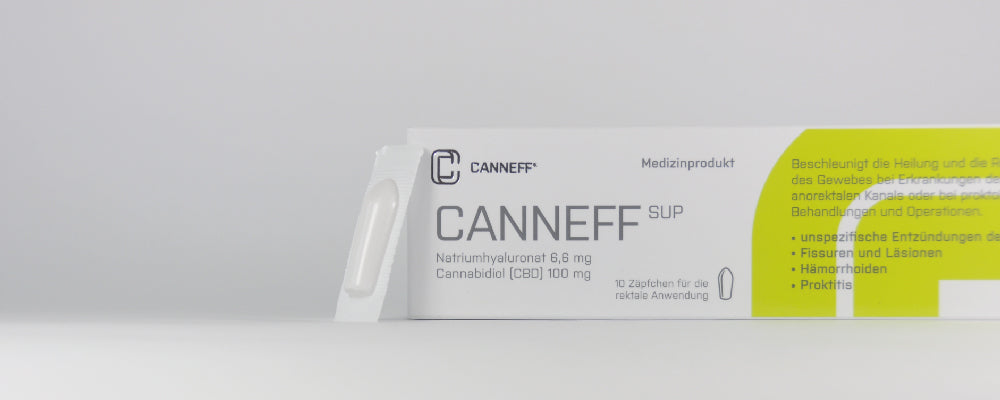
CANNEFF® SUP CBD suppositories for rectal use can relieve symptoms of anal fissures. The suppositories promote and support the healing process of small and deep fissures and lesions in the anus and rectal area. Even after colorectal surgeries, CANNEFF® SUP CBD suppositories Help you support the recovery process and minimize discomfort. Even with ulcers in the rectal area or anal fissures, the CANNEFF® SUP CBD suppositories support the healing process with the unique combination of CBD and hyaluronic acid.