Anal vein thrombosis


Inhaltsverzeichnis
What is an anal vein thrombosis, anal thrombosis, or perianal vein thrombosis (anal margin thrombosis)?
What are the symptoms of anal vein thrombosis? How can I recognize an anal thrombosis?
What are the causes of anal vein thrombosis?
What helps against anal venous thrombosis? How do I get rid of an anal thrombosis?
Can an anal thrombosis go away on its own? What happens if an anal thrombosis is not treated? How long does an anal vein thrombosis last? How long does an anal thrombosis swell?
What is the difference between hemorrhoids and anal vein thrombosis (anal thrombosis)?
How do CANNEFF® SUP suppositories work in the treatment of anal vein thrombosis, anal fissures, and other complaints in the anal area?
What is an anal vein thrombosis, anal thrombosis, or perianal vein thrombosis (anal margin thrombosis)?
Anal thrombosis (anal vein thrombosis) is a painful swelling in the anal area caused by a venous blood clot. In anal vein thrombosis, a nodule appears in the area of the anus; the anal thrombosis is a blood clot in a vein in the outer anal region, usually accompanied by acute pain. One or more bluish, painful nodules may be visible at the anus. If the vessel ruptures, a hematoma and occasionally bleeding at the anus can occur.
What are the symptoms of anal vein thrombosis? How do I recognize an anal thrombosis?
Anal vein thrombosis is a blood clot (thrombus) in the superficial veins of the anus. It leads to blood congestion and thus to a painful swelling in the form of one or more bluish-red nodules at the anus. Those affected usually notice an anal vein thrombosis through mild to severe Pain at the anus, or also Itching at the anusThese symptoms develop suddenly or within a short period. In some cases, the pain can be so severe that sitting becomes impossible for those affected. Visually, an anal vein thrombosis can be diagnosed by reddish-blue nodules around the anus. These can range in size from a pinhead to even as large as a plum. Sometimes several small nodules form next to each other.
What are the causes of anal vein thrombosis?
There are numerous possible causes of anal vein thrombosis, which can lead to painful blood clots around the anus. Sometimes diarrhea, coughing, straining hard during bowel movements, or even anal sex can cause blocked veins in the anal area, i.e., anal vein thrombosis. Being overweight can also put pressure on the anal region and anus, thereby promoting the occurrence of anal vein thrombosis. Extreme temperatures, such as sitting for a long time on cold surfaces, are also risk factors for anal vein thrombosis. Contact with damp cold during prolonged sitting, for example while surfing or in winter after sports, can thus promote the occurrence of anal thrombosis. The consumption of alcohol or coffee is also considered an additional risk factor for the occurrence of anal thrombosis. Generally, men are more frequently affected by anal vein thrombosis than women. However, there are also some female-specific risk factors, such as hormone-related vessel dilation during pregnancy or childbirth. Many of the causes mentioned can also Hemorrhoids cause. Hemorrhoids can also occur together with anal vein thromboses. Perianal or anal pain can also be caused by Anal fissure, Anal fistulas or anal abscesses indicate.
What helps against anal vein thrombosis? How do I get rid of an anal thrombosis?
Relieving measures can be taken, especially through certain ointments or suppositories, as well as CANNEFF® SUP Suppositories. Creams, ointments, painkillers, or suppositories with anti-inflammatory agents are often used to treat anal vein thromboses in order to Pain in the Anus to relieve. If anal vein thromboses do not disappear, surgery on the anal vein thrombosis, usually under local anesthesia, can also be performed.
Can an anal thrombosis go away on its own? What happens if an anal thrombosis is not treated? How long does an anal vein thrombosis grow? How long does an anal thrombosis swell?
Smaller anal vein thromboses often heal on their own within a few days or weeks. The body gradually reduces the swelling. In the case of large anal vein thromboses, an ulcer, severe Pain in the Anus and can eventually burst. Even slight pressure, for example from excessive cleaning with toilet paper, can open the anal vein thrombosis and thus lead to a wound in the anus. This usually involves bleeding from the anus and an immediate relief of Pain in the Anus accompany it. In most cases, the wound in the anus heals on its own within a few days. If the anal vein thrombosis bursts or becomes inflamed, causing a wound in the anus, medical consultation is definitely necessary. After medical advice, healing can be supported with the right therapy, such as ointments or also CANNEFF® SUP Suppositories are supported.
Those affected who experience severe pain due to an anal thrombosis Pain in the Anus should consult a specialist. This also applies to all patients who suffer from an anal vein thrombosis for more than three weeks. If even Blood in the stool If blood appears in the stool, a prompt visit to a specialist for clarification of the causes is also recommended.
What is the difference between hemorrhoids and anal vein thrombosis (anal thrombosis)?
When there is pain, itching, or burning at the anus, many first think of Hemorrhoids. The distinction between anal vein thrombosis and Hemorrhoids is often not so simple. The two conditions, namely anal thrombosis and Hemorrhoids mainly share their location in the anal region or at the anus. Hemorrhoids are located inside the intestine but can prolapse through the anus due to straining or in later stages of the disease. Anal vein thrombosis, on the other hand, is a venous blood clot visible under the skin surface at the anus and can cause severe Pain in the anus as well as an unpleasant pressure sensation in the anal region can occur. We definitely recommend visiting a trusted doctor to get to the root of the causes with their expertise.
How do CANNEFF® SUP suppositories work in the treatment of anal vein thrombosis, anal fissures, and other anal area complaints?
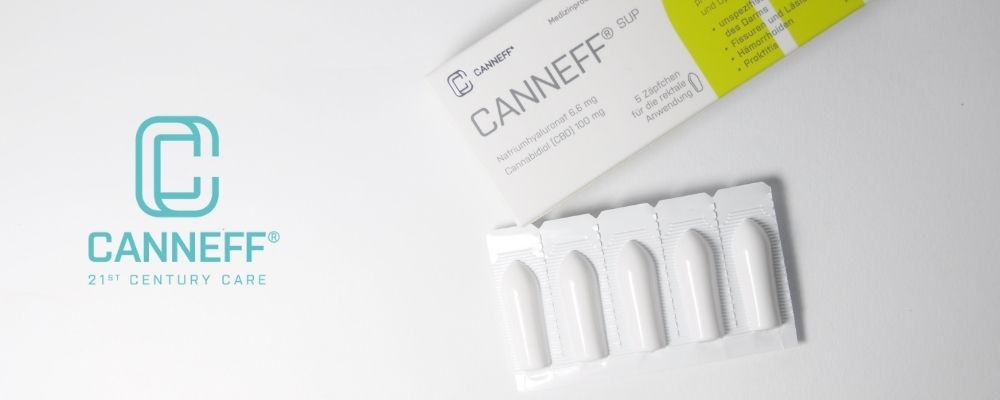
CANNEFF® SUP suppositories for rectal use can relieve symptoms of lesions in and around the anus as well as in the rectal area. The suppositories contain the unique combination of the two active ingredients CBD and hyaluronic acid. CANNEFF® SUP suppositories promote and support the healing process and regeneration of tissue and mucous membranes in the anal area. CANNEFF® SUP suppositories help heal ulcers in the rectal area and support your recovery. Even after colorectal surgeries, CANNEFF® SUP suppositories can help support the healing process and minimize discomfort.
Quellenverzeichnis anzeigen