Pain in the anus


Inhaltsverzeichnis
What symptoms occur when the anus hurts?
What are the causes of pain in the anus?
What to do if the anus hurts?
When should you see a doctor for anal pain?
How do CANNEFF® SUP suppositories work in treating pain in the anus and other anal complaints?
In many cases, suppositories are often generally used for pain at the anus Hemorrhoids blamed. Treatment often involves suppositories such as CANNEFF® SUP Suppositories, ointments, or sitz baths. However, the cause of pain at the anus is not always due to Hemorrhoids, because many other diseases can also occur in the anal area.
This blog post is intended to help you find out which condition might be causing your pain at the anus and how you can proceed with treatment and therapy of complaints in the anal region. In any case, we recommend consulting your doctor for a precise analysis of the pain or other complaints at the anus. The earlier the cause of your anal complaints is clarified with medical expertise and diagnostics, the more successful the respective therapy approach will be.
What symptoms occur when the anus hurts?
Pain at the anus is a symptom that can have many causes. The pain in the anal area can also vary greatly in intensity. Depending on the cause, the pain is often not an isolated symptom but is often accompanied by Burning at the anus, oozing at the anus and also Itching at the anus accompanied. Pain and irritation in the anal area can also be caused by improper intimate hygiene, temporary allergic reactions to certain foods or care products, or simple skin irritations from activities such as horseback riding or cycling. Persistent pain, however, always requires medical evaluation and can indicate some serious conditions such as Hemorrhoids, Anal fissures, Anal fistula or anal abscesses or also Cryptitis, Proctitis or also Prostatitis indicate.
What are the causes of pain at the anus?
Pain during bowel movements and blood on the toilet paper or even Blood in stool associated with severe Burning at the anus, indicate either Hemorrhoids or also of a Anal fissure here. Sudden, severe pain at the anus and a palpable lump are rather indicators of a Anal venous thrombosis. In the case of a Anal venous thrombosis it is a blood clot in a vein in the outer anal region, which is usually accompanied by acute pain. Symptoms of Kryptitis are rather dull complaints at the anus, such as stabbing or pressure in the anus, burning after bowel movements, or also itching in and around the anus. However, these complaints are often also attributed to Hemorrhoids are assigned. Other causes of pain at the anus are Anal fistulas and anal abscesses or also Anal eczema. Also a Anal spasm (Proctalgia fugax) manifests as pain in the anal region.
What to do if the anus hurts?
For anal complaints such as pain at the anus, Burning at the anus and Itching at the anus sometimes simple hygienic measures help to get rid of the unpleasant symptoms. Often, it is just an inflammatory irritation of the skin behind it, that is a Anal inflammation. What measures can generally be taken?
Careful cleaning and care of the anal area
Proper cleaning and care of the anal area is an essential element of prevention and treatment. If stool residues remain around the anus or on the perineum, or even in the anal fold after bowel movements, they cause a strong inflammatory reaction in the skin. Overly thorough and intensive cleaning can also do more harm than good. Strong mechanical friction or wet wipes with care agents can often heavily burden the skin. So avoid vigorous "wiping" and, if you already have symptoms, use wipes moistened with lukewarm tap water to thoroughly clean the anal area. Soap should be absolutely taboo in the anal area. Dried stool residues are best removed by gently patting with a washcloth soaked in warm water.
Proper selection of underwear and clothing
Sweat, moisture, and thus friction can cause or worsen skin irritation in the anal area and various symptoms such as pain around the anus. Long hikes or extended walking or cycling trips, especially when sweat caused by heat and friction, as well as tight synthetic underwear, cannot be adequately removed from the skin. Therefore, clothing made from natural materials like cotton, hemp, or linen is recommended. It is also very advisable to change sweaty underwear several times a day if necessary. If possible, shower in between to thoroughly remove dried sweat from the intimate area.
Relieve inflammation
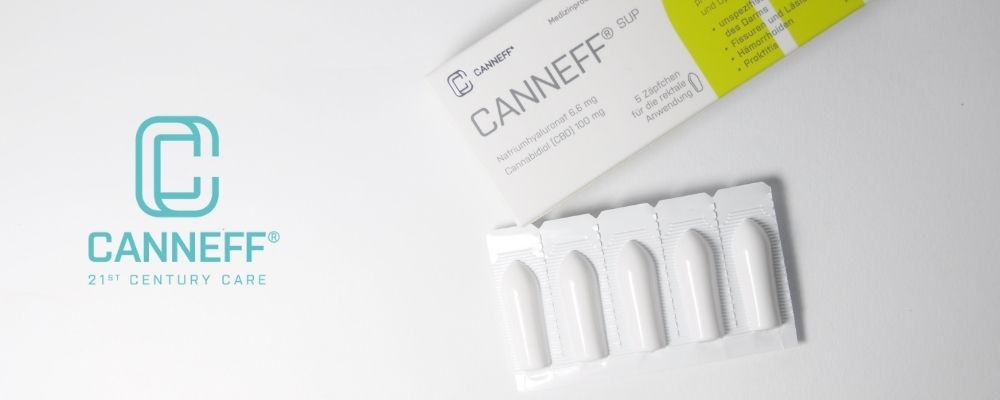
If you are already experiencing anal discomfort, you can initially treat inflamed or irritated areas yourself. The use of suppositories has proven effective here, as well as various ointments and creams, and warm sitz baths with anti-inflammatory chamomile extracts. CANNEFF® SUP Suppositories for rectal use can relieve symptoms of hemorrhoids and cryptitis and support the healing process in anal fistulas, anal fissures and after colorectal surgeries.
When to see a doctor for anal pain?
For persistent complaints in the anus and rectum, the proctology specialist field is the medical specialty that deals with complaints in the rectal or anal area. With symptoms such as Itching in the anus, moisture, and pain in the anus are conditions where the proctology specialist field offers the right expertise and experience to comprehensively diagnose your condition and effectively treat it. If the pain indicates an anal fistula or anal abscess , this is a clear case for evaluation by the proctology specialist circle and consequently also surgery.
How do CANNEFF® SUP Suppositories work in treating pain in the anus and other anal complaints?
CANNEFF® SUP Suppositories for rectal use can alleviate symptoms of Hemorrhoids, Proctitis and Cryptitis relieve. The suppositories promote and support the healing process of small and deep fissures and lesions in the anal and rectal area.
To relieve symptoms of cryptitis:
CANNEFF® SUP Suppositories provides relief for symptoms of cryptitis.
To support the healing process of smaller or deeper fissures and lesions:
CANNEFF® SUP Suppositories promote the healing process of small or deep fissures and lesions to support your health.
To support the healing process of Anal fistulas:
CANNEFF® SUP Suppositories can help women and men who are dealing with Anal fistulas struggle, support the healing process.
To support the healing process after colorectal surgeries:
After colorectal surgeries, it can CANNEFF® SUP Suppositories Helping you support the recovery process and minimize discomfort.